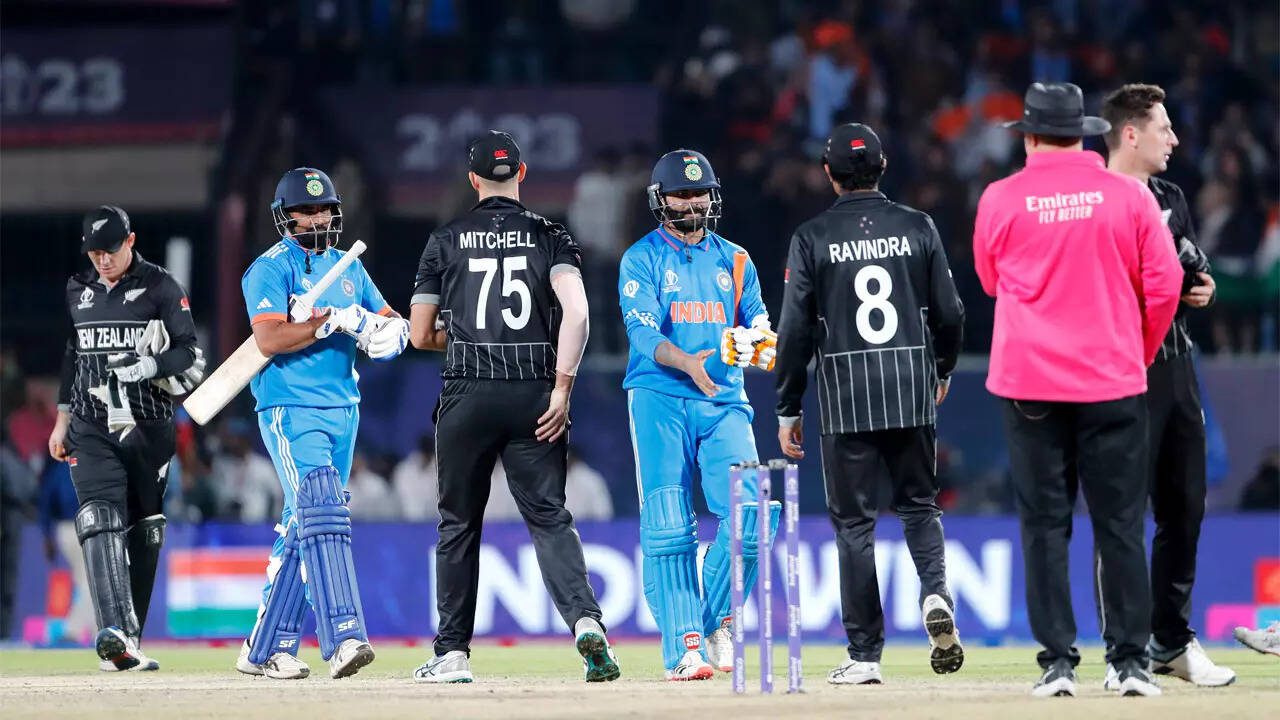
The two teams will now face off in a pair of Test matches following the conclusion of the T20I and ODI series in New Zealand, both of which India won. These two exams will take place in Wellington starting on November 19 and in Christchurch starting on November 27. Notably, India was defeated 0-2 in 2020 and hasn’t won a Test in New Zealand since 2009.
In order to qualify for the World Test Championship (WTC 2027) final, India would be keen to win the two-Test series 0-2. However, there is a very possible chance that India might not win the Test series, and it is even more possible that they might get white washed in the two Test series.
Here are the 3 reasons why India could suffer a 0-2 Test series defeat against New Zealand:
3. Poor record in New Zealand
India has a very poor record in New Zealand when it comes to Test cricket. Conditions are so poor for India that they have won only one Test since their 1980 tour in New Zealand. That one test win also gave them the series win in the 2009 series. Since then, India has failed to win a Test in New Zealand in the 2014/15 and 2019/20 series. In fact, India was whitewashed 2-0 by New Zealand the last time they visited the country just before the Covid pandemic began.
2. New Zealand bowlers lethal in-home conditions
New Zealand will field their best pacers in the Test series against India. The likes of Matt Henry, Kyle Jamieson, Jacob Duffy, and Nathan Smith. All of these bowlers are capable of both swinging and getting the ball to move off the pitch under favorable conditions. New Zealand remains overcast in November-December mostly, giving a cloud cover that aids pace bowling. New Zealand have the wares to trouble Indian batters throughout the day, as pace bowlers are employed the majority of the time.
1. Indian batters’ poor technique against swing and movement
In New Zealand, usually 15-20mm of grass is left on the pitch, giving it a green tinge and making it a bowler’s paradise. Indian batters will have to deal with not only the ball swinging in the air and moving off the pitch but also steep bounces that make medium-fast bowlers look like express. Given that Indian batters are used to playing on low bounce and slow wickets at home, they will have very little time to adjust to these bouncy, swinging, and seaming conditions. To succeed in New Zealand, Indian batters will have to give time to themselves to get set and then score runs, as any attempt to dominate the opposition from the go might result in India losing quick wickets.