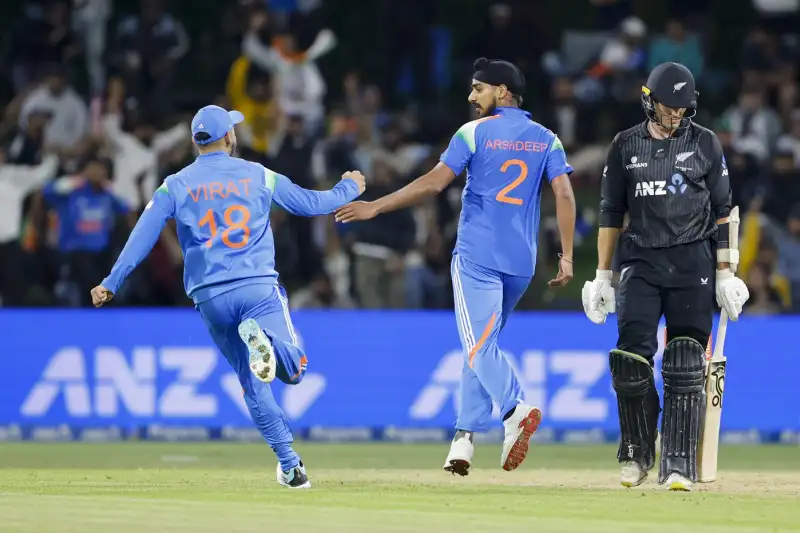
New Zealand and India clashed in the first Test of the two-match series from November 19 onwards, and the game was played at the Basin Reserve in Wellington. New Zealand was asked to bat first by Shubman Gill, who won the toss and posted 368 runs, with Henry Nicholls and Glenn Phillips scoring centuries. In response, KL Rahul and Rishabh Pant hit centuries, and Shubman Gill made 98 as India posted a record 720/9d in their first innings.
New Zealand made 239/5 in their second innings, batting well over 90 overs to save the Test. Incidentally, Shubman Gill and New Zealand batters shook hands for a draw before the mandatory 15 overs were to start. This raised questions over why Shubman Gill and co. didn’t go for those overs and potentially tried to win the match. Today, let’s see the 3 reasons why India settled for a draw in the first Test.
Here are the 3 reasons why India settled for a draw in the 1st NZ vs IND Test:
3. No help from the pitch
The Basin Reserve pitch for the first Test was expected to give bowlers assistance at least for the first three days. However, the assistance ended after the first two sessions of the game, as New Zealand recovered from losing five early wickets to post 368 runs in their first innings. The pitch didn’t offer any seam movement or uneven bounce, even on the final day, and was just a dead wicket. The situation was further worsened by the fact that after about 25-30 overs, the Kookaburra ball had softened, causing a lack of bounce for the fielders at slips.
2. Fast bowlers’ fatigue
Indian pacers had a punishing outing in the Wellington Test. Jasprit Bumrah bowled 49 overs, while Anshul Kamboj and Prasidh Krishna sent down 45 overs each, and Akash Deep bowled 43. Bumrah only bowled 11 overs on the final day as the pitch didn’t offer anything to the pacers. After bending their backs and giving it their all in the bowling 120 overs, they were visibly exhausted, with speeds dropping to a low 130 kps.
1. The second test begins in only 3 days.
The second test of the two-match series begins in Christchurch on November 27, giving India only three days of rest, including a travel day in between. The tight tour itinerary played a major role in India’s conservative call to shake hands early. The Indian team’s management adopted the approach of effective workload management in order to ensure that their front-line fast bowlers remained fresh and fit for the critical match at Hagley Oval. It was understood that the overworking of the pacers might affect their chances of winning the second Test.